
Customize the Log Work Form per Work Item in Jira
Show different work log fields for different work items, clients, and kinds of work.
A service team rarely logs the same things on every task. On-site work needs mileage and travel time; one client wants a PO number on every entry, another doesn't; internal work needs none of it. Forcing one fixed form on all of them means clutter on some work items and missing data on others.
JetTime, a time-tracking app for Jira from the Atlassian Marketplace, builds the Log Work form per work item — so each kind of work, and each client, gets exactly the fields it needs. It's a level of form customization we haven't seen in any other Jira time tracker.
How It Works
The form is built from Field Schemes. Each scheme lists the fields to show and a rule for which work items it applies to. When someone logs work, JetTime picks the scheme that matches the work item and builds the form from it — no manual switching. Below is one setup with three schemes.
On-Site Client Work
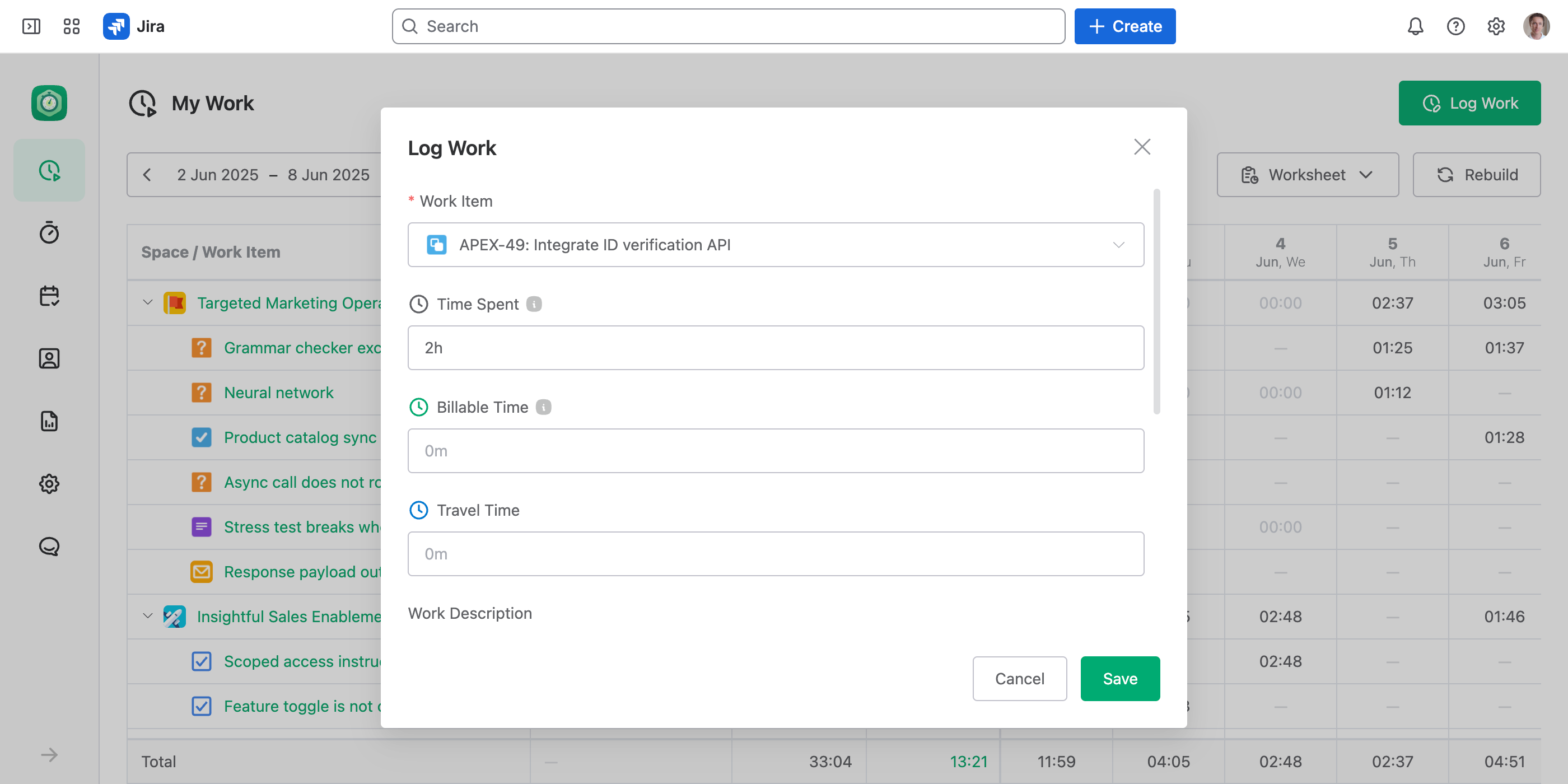
For visits to a client's site, you bill the hours and need the details that go with travel. A scheme scoped to your on-site work shows:
- Time Spent and Billable Time — the hours, and which of them are billable.
- Travel Time — a separate category, so travel is tracked apart from the work.
- Account — the client being billed (required).
- Mileage — a number field for distance driven.
Work for a Client with Their Own Requirements
Different clients have different billing requirements. Say one client won't accept an invoice without a purchase order number and a cost center on every line. A scheme scoped to that client's space adds exactly those, and makes them required:
- Time Spent and Billable Time, with the Account.
- PO Number — a text field, required, so no entry is missing it.
- Cost Center — a single-select field with that client's cost centers.
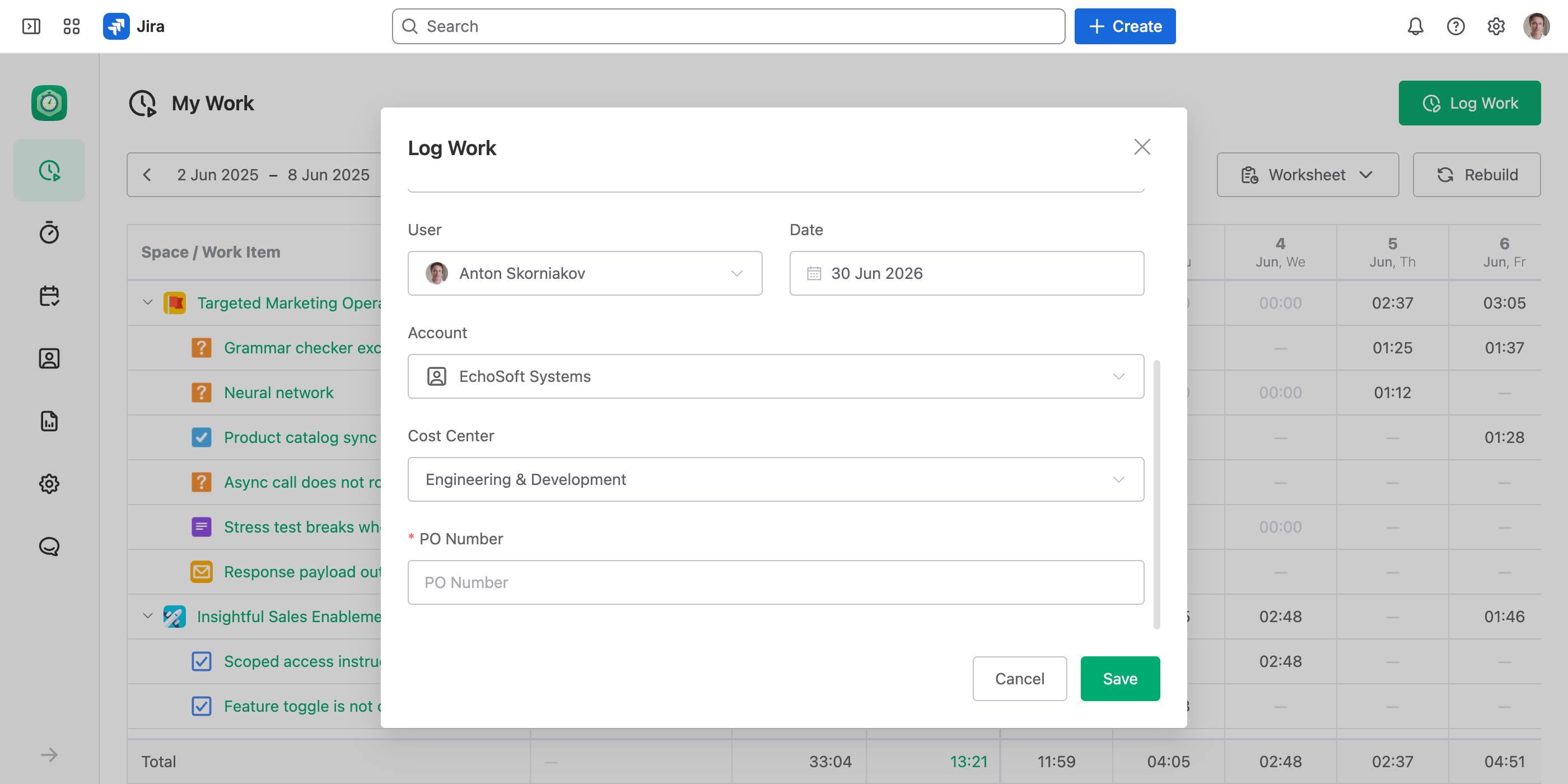
These fields appear only on that client's work — everyone else's form stays clean.
Internal Work
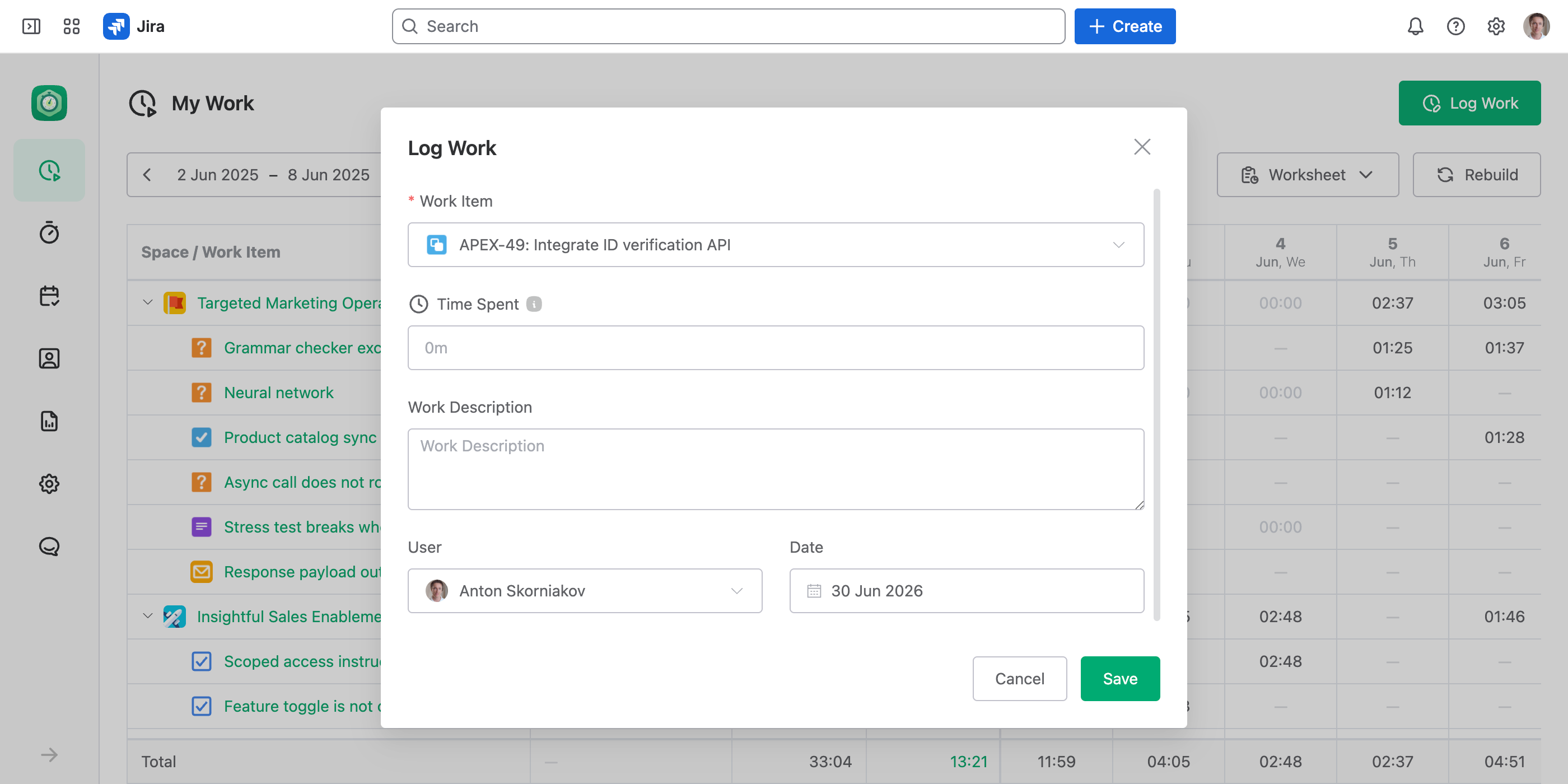
Internal tasks aren't billed, so most of those fields would just be noise. A scheme scoped to your internal space keeps the form to the essentials:
- Time Spent — the hours.
- Work Description — optional.
Setting It Up
Each form above is one scheme. To build one:
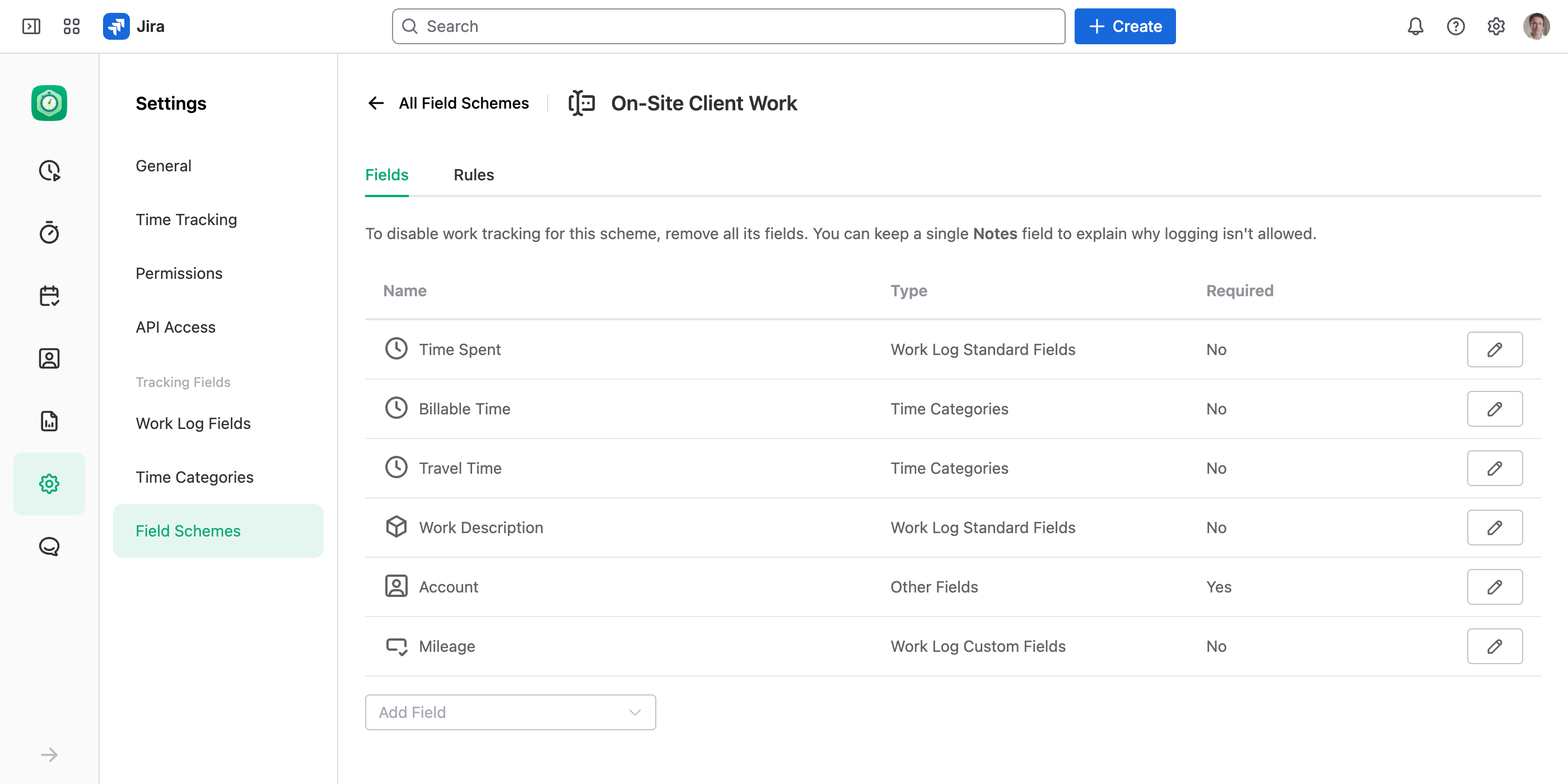
Add the fields
In Settings > Field Schemes, create a scheme and, on the Fields tab, add the fields that kind of work needs. Mark the ones that must be filled in as Required.
Scope it with a rule
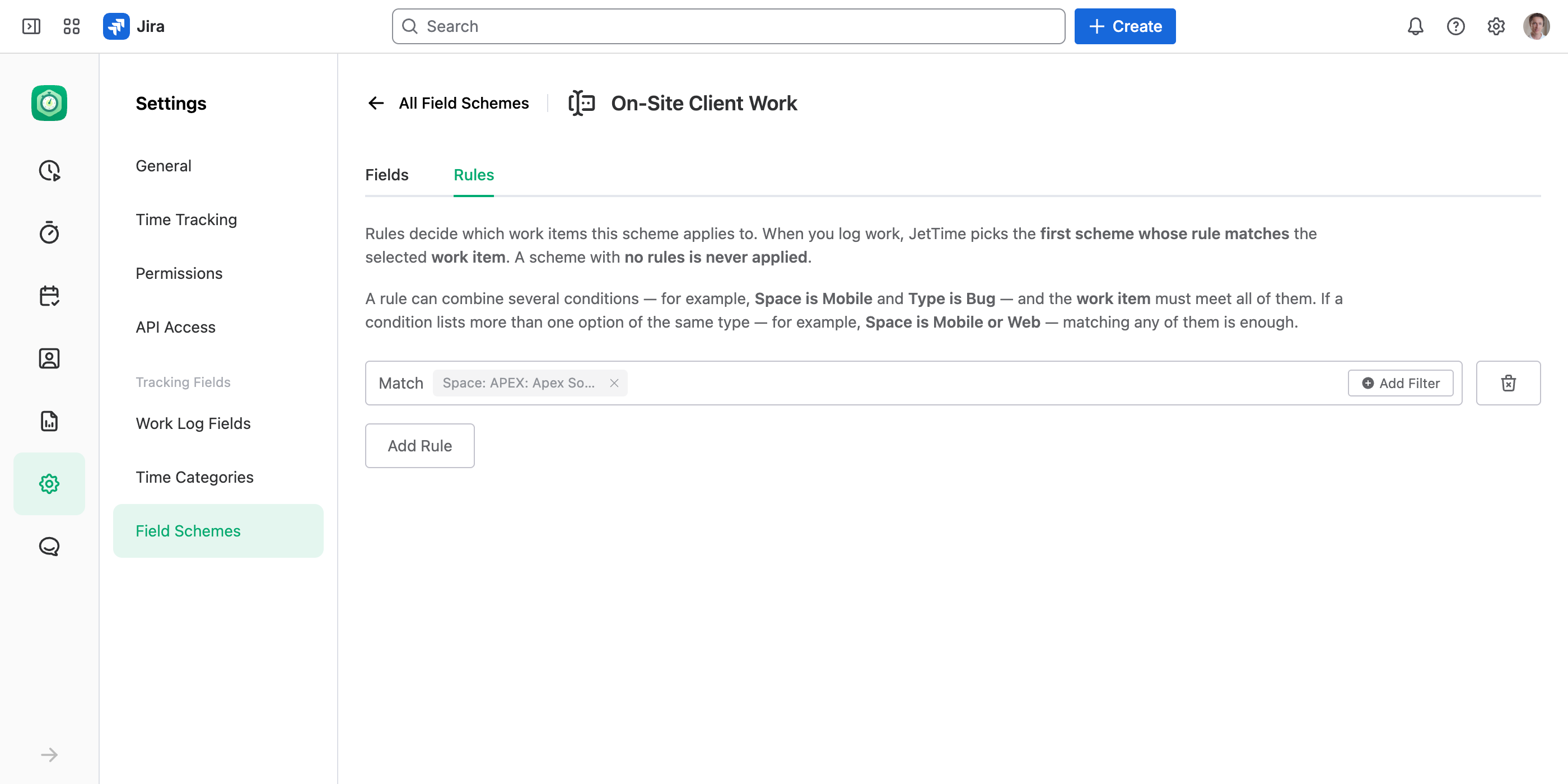
On the Rules tab, point the scheme at the right work items — by Space, Work Item Type, Status, or any combination. For example, one scheme for a client's space, another for your internal space.
Save
Click Save Scheme. Each work item now shows the form that fits it, automatically.