
Configuring Field Schemes
Customize the Log Work form per work item, or disable logging for some work items.
Field Schemes decide which fields appear on the Log Work form for each work item, and how each one behaves. Instead of one fixed form for everything, you can show only the fields that fit a kind of work, mark the right ones as required, or turn logging off entirely for some work items. A scheme is resolved per work item: when someone logs work, JetTime applies the first scheme whose rules match the selected work item, and there is always a Default scheme for everything else.
How to Configure a Field Scheme
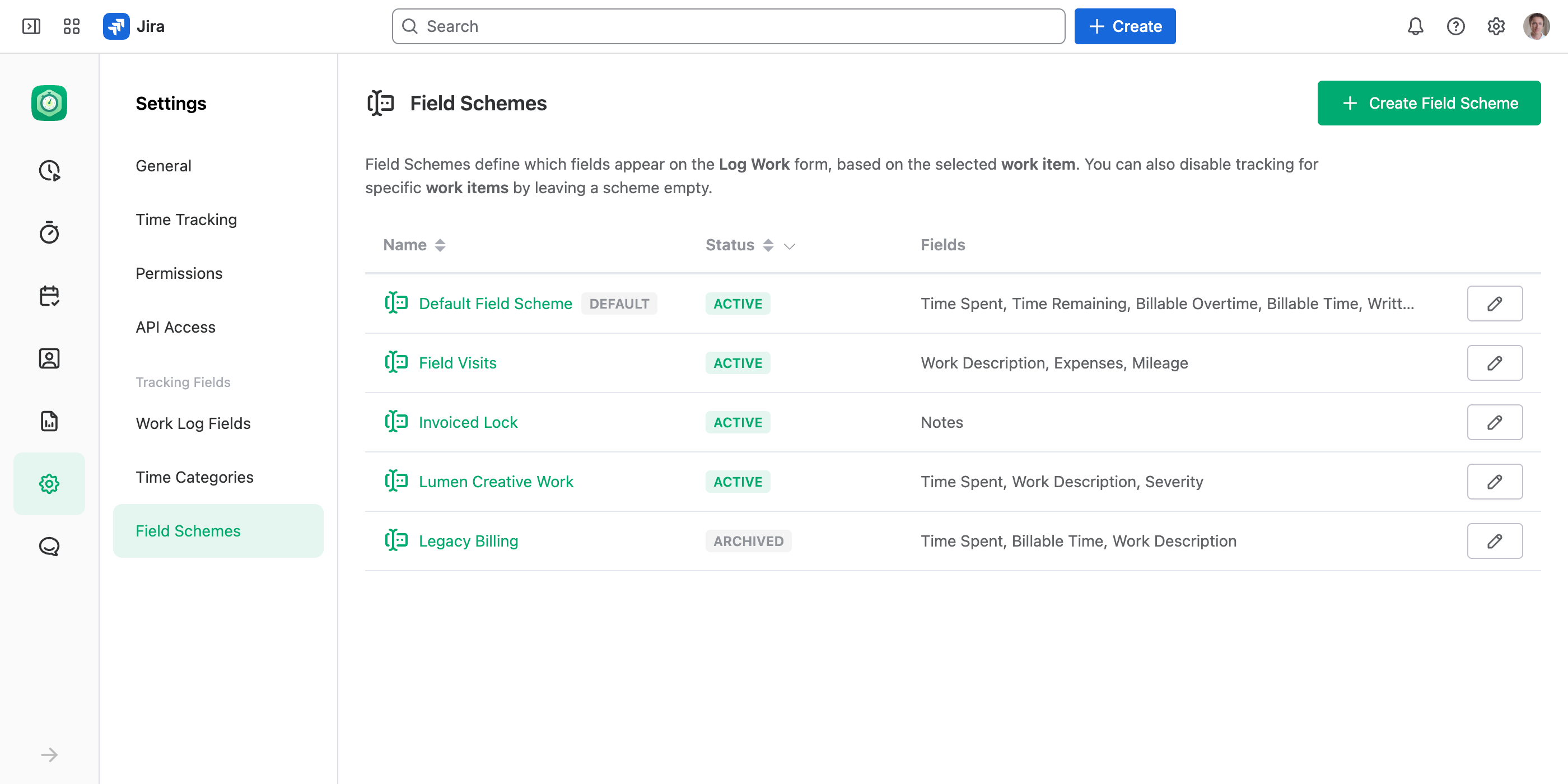
Open Field Schemes: In the JetTime app, navigate to Settings > Field Schemes (under Tracking Fields).
Create or edit a scheme:
- Click Create Field Scheme to add a new one.
- Click a scheme's name to open it, or the edit icon to rename it or change its status.
Choose the fields (Fields tab): Click Add Field to add fields to the form, then click a field to set how it behaves:
- Fields you can add: Time Spent, Time Remaining, Work Description, Account, any custom time category or work log field, and a Notes block.
- Required: make the field mandatory. The same field can be required in one scheme and optional in another.
- Copy from Regular Time (time categories only): pre-fills the category from the Time Spent value as the user types.
- Notes: choose a type (Info, Success, Warning, or Error) and write the message shown on the form.
For example, a scheme for support work might show Time Spent and a required Work Description; a scheme for field visits might drop time entirely and show only a Mileage and Expenses field. Each kind of work gets exactly the form it needs.
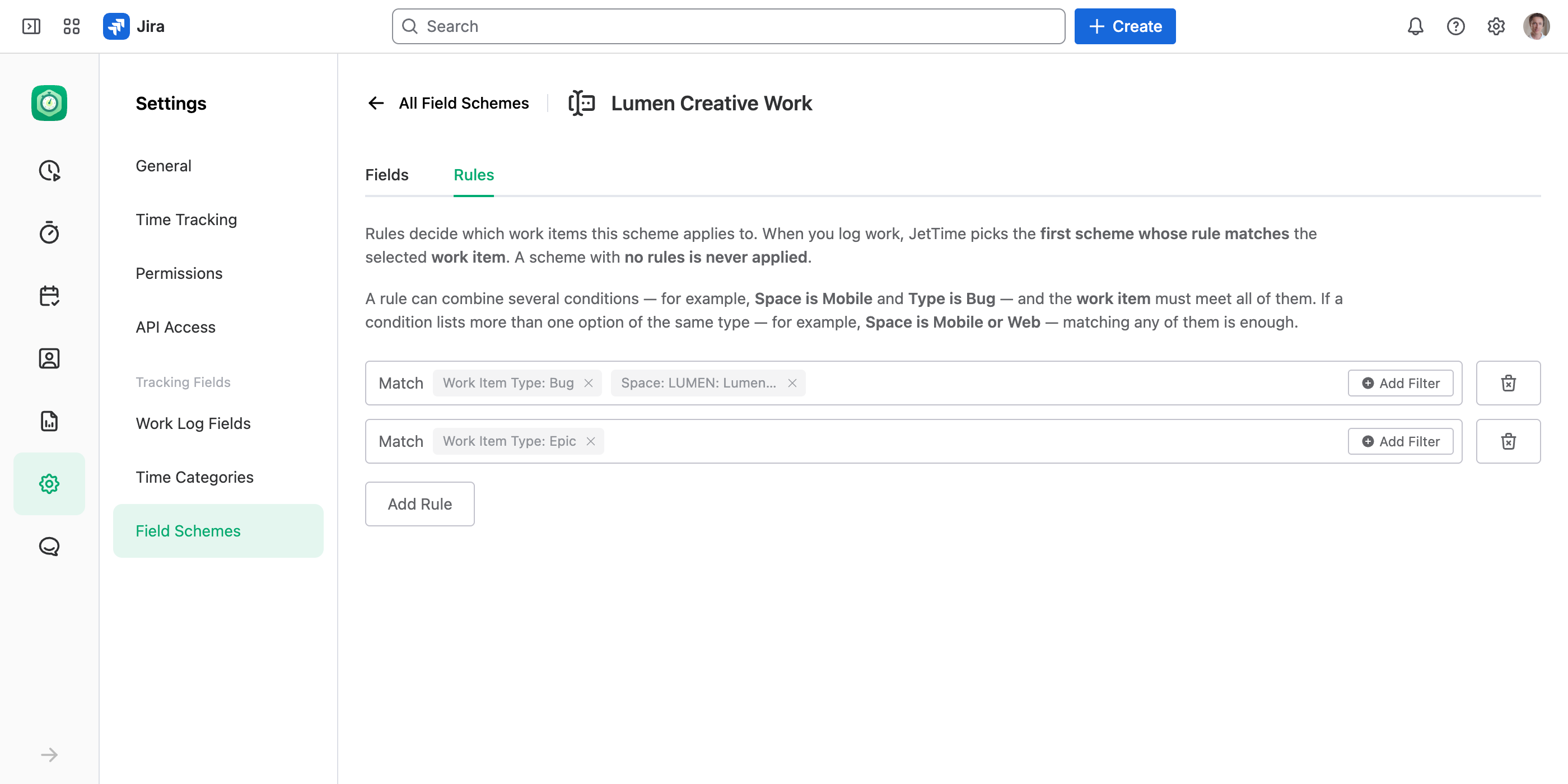
Set the rules (Rules tab): Rules decide which work items the scheme applies to. Within one rule, conditions combine — a work item must meet all of them, and a condition that lists several options of the same type (for example Space is Lumen or Web) matches any one. Add more rules when a single combination isn't enough: a work item that matches any rule gets the scheme.
For example, two rules cover two different cases at once: apply the scheme to bugs in the Lumen Creative Campaigns space, or to any epic across all spaces.
- Rule 1: Space is Lumen Creative Campaigns and Work Item Type is Bug
- Rule 2: Work Item Type is Epic
The Default scheme has no rules and applies whenever no other scheme matches.
Save your changes: Click Save Scheme to apply.
Disabling Logging for Some Work Items
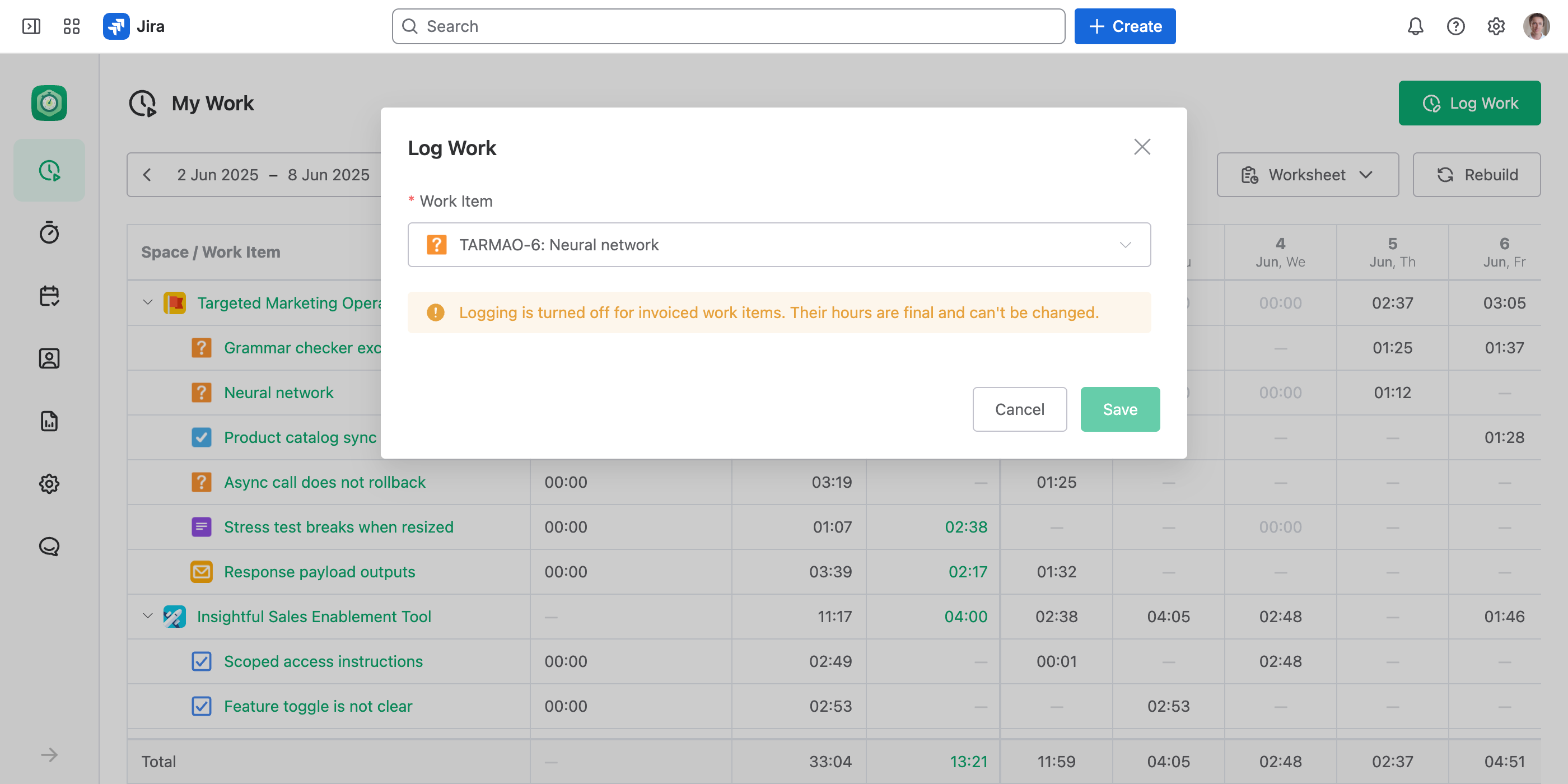
A scheme with no input fields disables logging for the work items it covers. Remove every field — you can keep a single Notes field to explain why — and the Log Work form for those work items shows only your note, with nothing to fill in and saving turned off. This lets you switch tracking off by rule, for example on work items whose status is Invoiced or Closed, so hours can't change after the books are done.
Additional Tips
- Design schemes so each work item matches at most one — if none match, the Default scheme applies.
- A non-default scheme with no rules never applies until you add at least one rule.
- Set a scheme's status to Archived to take it out of service without deleting it. The Default scheme is always active and can't be archived or deleted, but you can rename it.
- Removing a category or work log field elsewhere simply drops it from any scheme that used it — nothing breaks.
Field Schemes draw on the fields and categories you've defined — see Setting Up Custom Work Log Fields and Defining Custom Time Categories.